
Wills vs. Trusts – What’s the Difference and Why It Matters
Wills vs. Trusts – What’s the Difference and Why It Matters
When it comes to estate planning, two of the most common tools are wills and trusts. Both help ensure your assets are passed on to loved ones, but they serve different purposes. Understanding the difference can save your family time, money, and stress.
At Blue Ink Signing Solutions, we see many clients unsure whether they need a will, a trust, or both. This guide will help you understand each option and how notarization plays a critical role.
1. What is a Will?
A will is a legal document that explains how your property and assets should be distributed after your passing. It can also:
Name guardians for minor children
Specify funeral or memorial wishes
Identify beneficiaries for personal belongings, financial accounts, or real estate
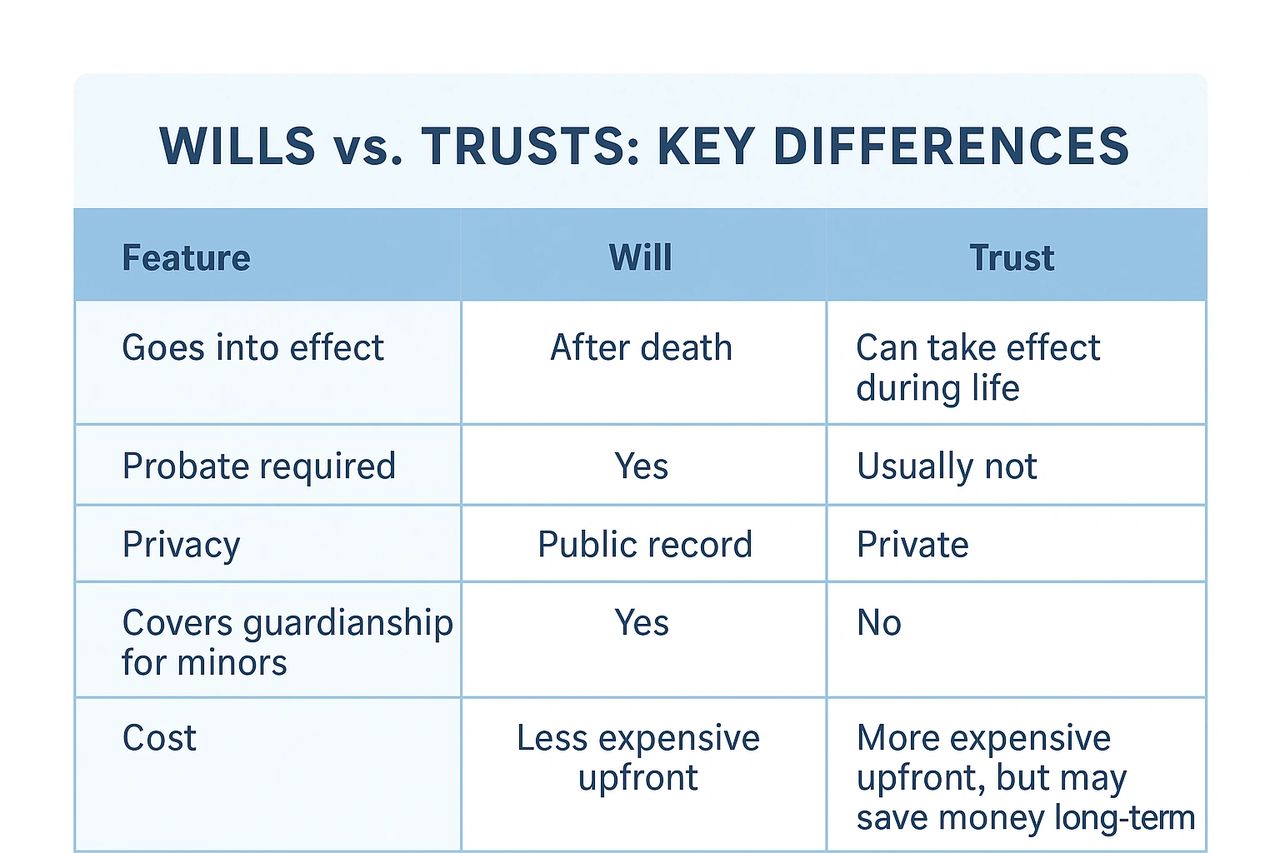
Most wills go through probate court, a public, time-consuming, and often expensive process where a judge oversees the distribution of your estate. This can delay inheritance for months or even years.
2. What is a Trust?
A trust is a legal arrangement where you transfer ownership of your assets to a trustee, who manages them for your beneficiaries.
Key benefits of a trust include:
Bypasses probate– your family receives assets faster
Privacy– keeps your estate out of public records
Reduced disputes– less chance of legal challenges or delays
Flexibility– you can set conditions, such as releasing funds when children reach a certain age or for education purposes only
3. Wills vs. Trusts: Key Differences
4. Where Notarization Comes In
Notarization ensures your estate planning documents are legally recognized and reduces hurdles for your family:
Self-proving wills: Many states require notarization so probate courts accept your will without locating witnesses.
Trust documents:Notarization is often required when transferring property into the trust, ensuring banks and courts honor it.
At Blue Ink Signing Solutions, we notarize wills, trusts, and related documents accurately and efficiently, giving your family peace of mind.
5. Which One is Right for You?
If you have minor children, a will is essential to appoint guardians.
If you want toavoid probate and keep your estate private, a trust may be the better choice.
Many families use both, creating a comprehensive plan to cover every scenario.
💙Protect your legacy. Whether drafting a will, creating a trust, or doing both, Blue Ink Signing Solutions ensures your estate planning documents are notarized properly, giving you and your loved ones confidence and peace of mind.
